
21 Aug Workshops in the run-up to the BAZAR Festival


September the 18th, 1-7 PM
Inspired by the wise fool Nasreddin, listed on UNESCO’s Intangible Cultural Heritage register and whose living voice is told in 40 languages, the BAZAR Festival sets out to celebrate the living traditions of the Silk Road through the richness of their cultural heritage: craftsmanship, storytelling, music, food and street arts.
Open to all, the Festival brings together artists, artisans and cultural traditions from Central Asia, the Middle East, North Africa and other regions of Asia all the way to India… The bazaar calls on all five senses to offer a festive, immersive experience — a sensory journey through a world of joy, hospitality and wisdom, sharing and cross-cultural exchange.
At Moulin Jaune, a creative laboratory in constant ferment, we’re committed to preserving and rediscovering traditional craftsmanship. In partnership with the SLAVA Fund, which brings a theoretical and artistic perspective to the theme, we invite you to make the most of the BAZAR Festival to meet artisans who have travelled the Silk Road and spend a few hours with them learning their craft.
On Friday, September 18, the day before the Festival opens to the public, a series of master classes lets you take part, at length, in immersive workshops led by master artisans from different countries — a chance to discover their expertise and create your own handmade pieces.
Alongside the master classes, the garden will be open for the final preparations for the big BAZAR.
Friday, September 18
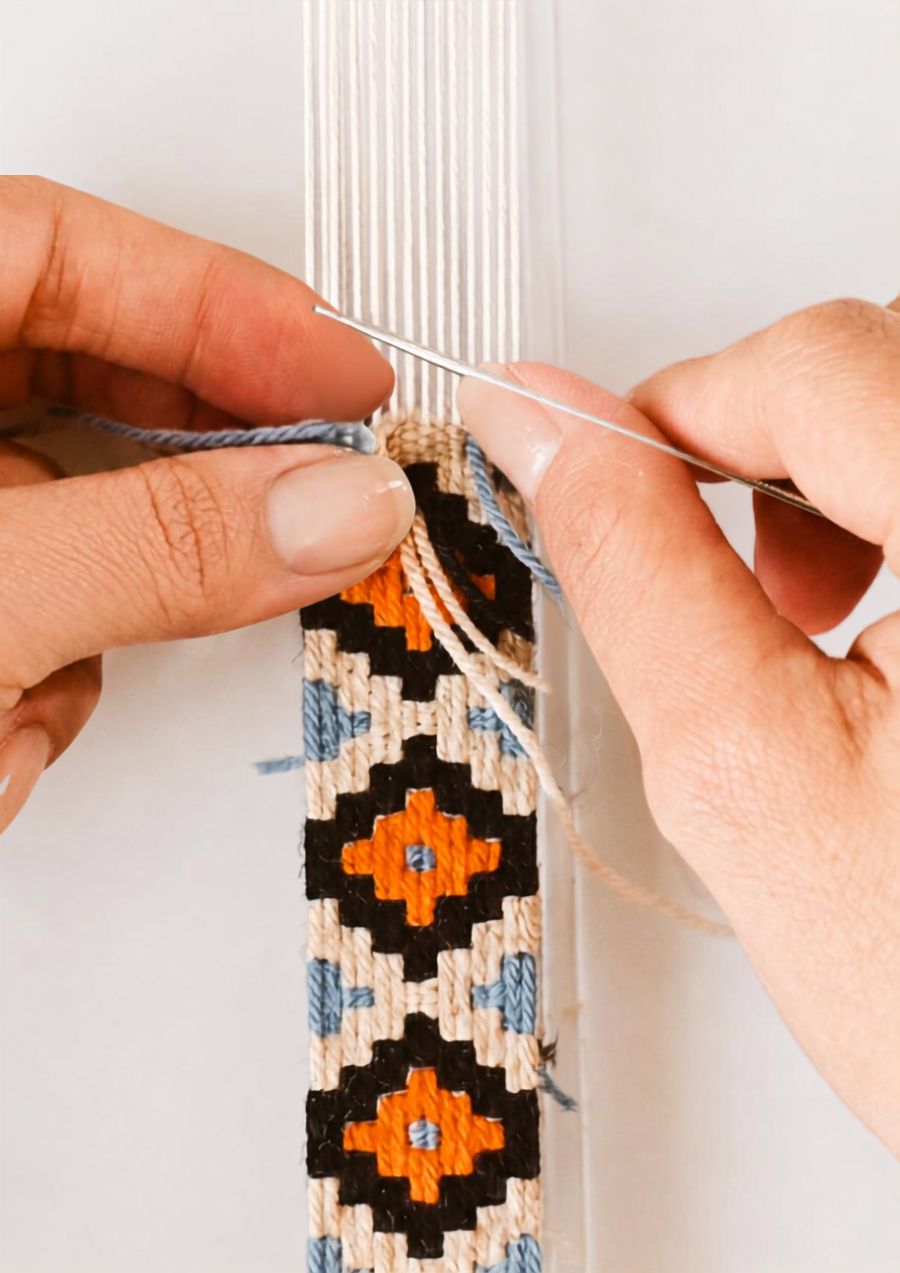
“Weaving Together” — the philosophy and practice of traditional Iranian weaving
1:00–4:00pm — 12 spots — Workshop in French, led by Maryam Imanizade-Diot
Maryam Imanizade-Diot, French-Iranian artist and visual arts teacher. A graduate of the Tehran Academy of Fine Arts and a PhD in the philosophy of art. Lives and works in the Alpes-de-Haute-Provence.
In this three-hour workshop, you’ll discover the fundamental gestures of traditional Iranian weaving and create your first geometric patterns through a few simple movements.
No prior experience is needed. Just sit down alongside the others, follow the rhythm of the hands, and let the threads gradually take shape into a pattern.
Philosophy — A kilim isn’t simply an object; it’s the result of thousands of small, repeated gestures. Each knot is a new decision, each row a continuation of the one before. Weaving invites us to slow down, to pay attention to the movement of our hands, and to be fully present in the moment. In this workshop, the kilim isn’t just a traditional craft, but a way of experiencing focus, rhythm and presence.
Why this workshop? Because before we can create something with others, we first need to learn how to connect with our own hands, with time, and with material.
Friday, September 18
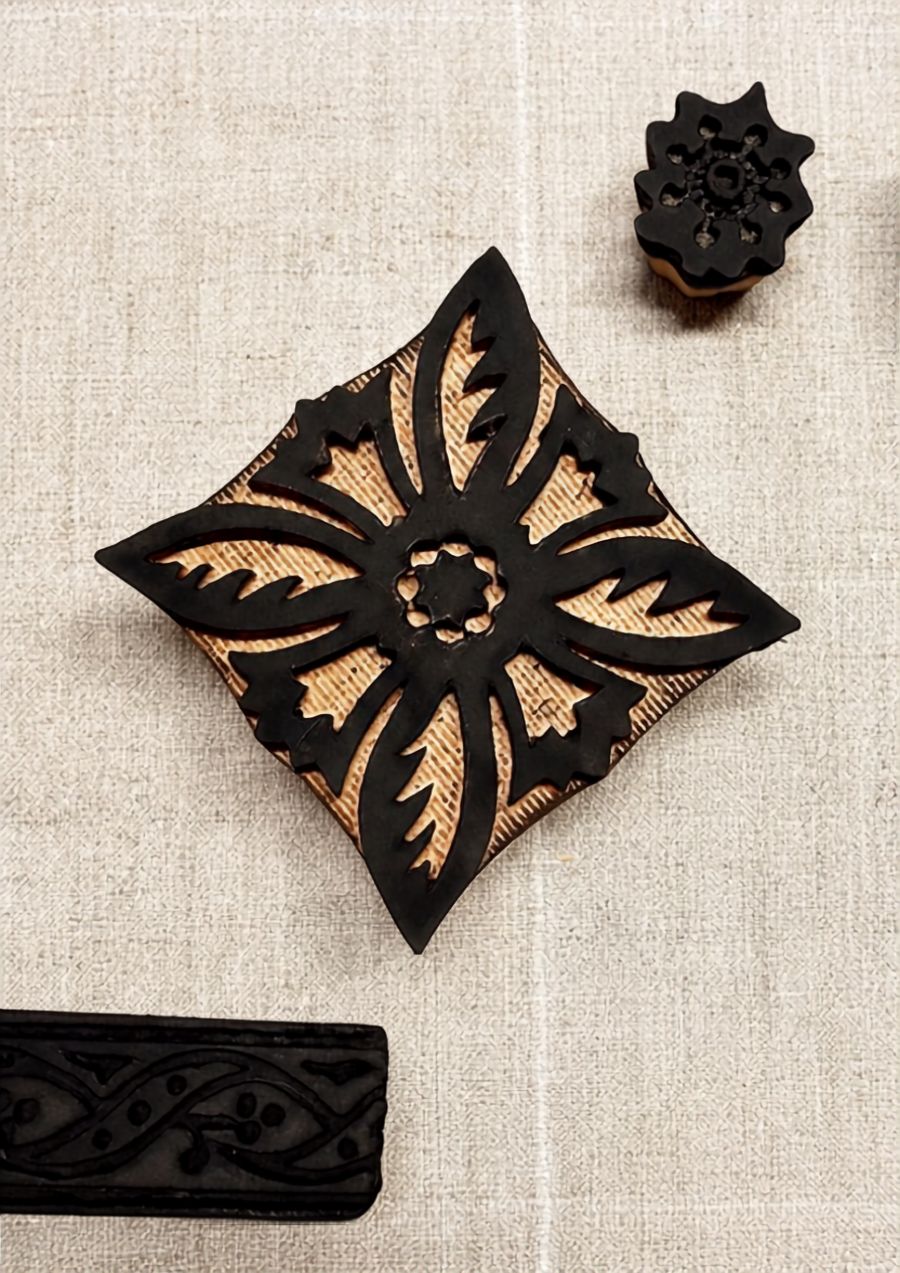
Woodblock Printing with Natural Dyes Master Class
2:00–4:00pm and 5:00–7:00pm — 8 spots — Workshop in Russian, English and French, led by Yurii Pak
Yuriy Pak is a master woodblock printer from Uzbekistan. He moved to Tbilisi in 2019 with his partner, Penelope Price, and opened the Block Printers Tbilisi studio. Their practice now spans Georgian motifs as well as Armenian and Central Asian patterns. They work with the finest excelsior silk and natural cotton, and their dyes are made entirely from natural sources — walnuts, pomegranates, onions, beetroot, cabbage, flowers, indigo and more. The wooden stamps are hand-carved from walnut and linden wood: everything is made by hand, using only natural ingredients. @blockprinterstbilisi
Participants will:
- Learn about the natural dyeing process
- Paint their own woodblock stamp
- Print their design onto cotton fabric
- Cut, wash, and fix the fabric
- Dry the piece in the garden
At the end, everyone takes home their very own hand-printed fabric.
Friday, September 18
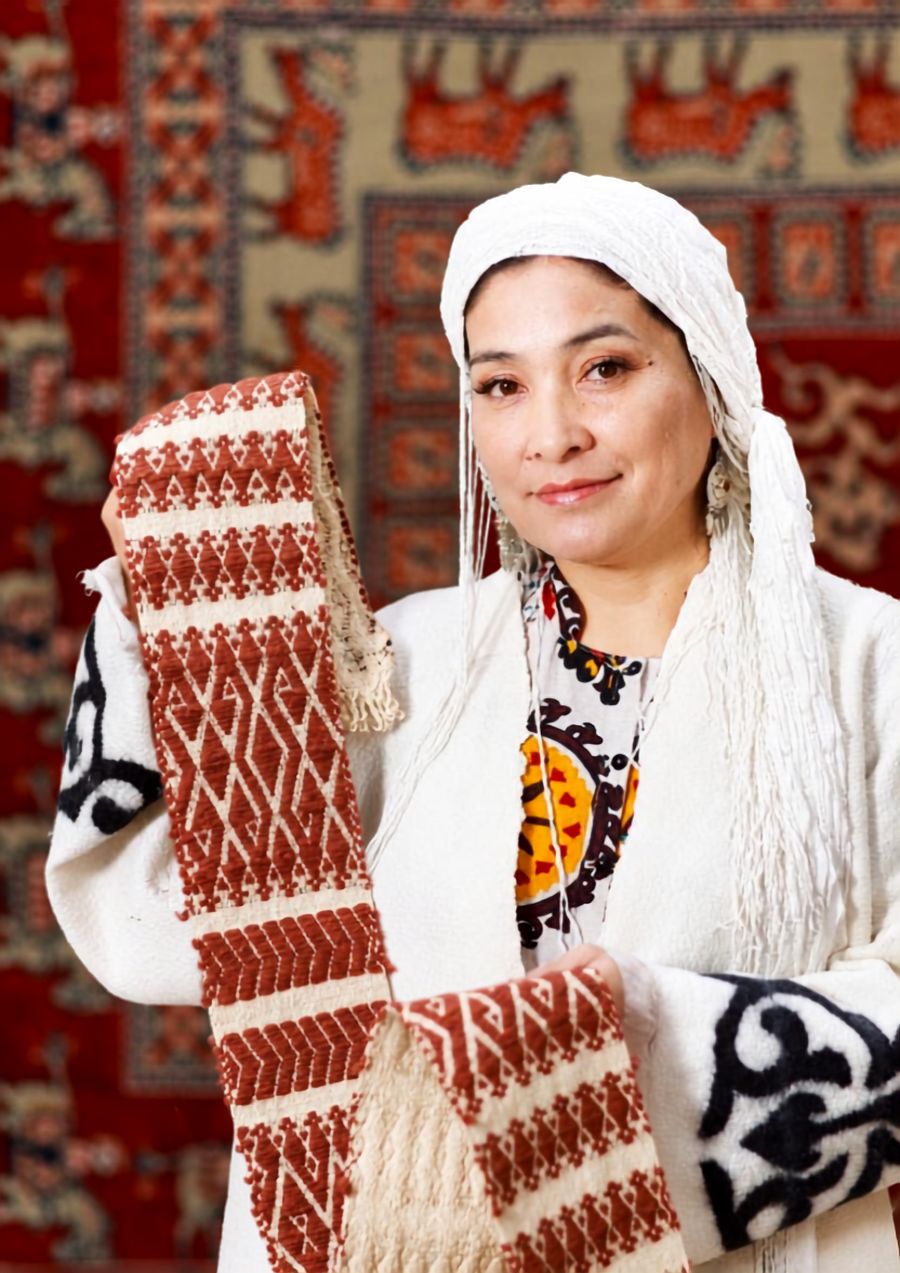
An Introduction to Syrmak — the Felt Carpets of Kazakhstan
3:00–7:00pm — 7 spots — Workshop led by the Union of Kazakh Artisans: Kalamkas Sarsengaliyeva and Mereke Aidarsha
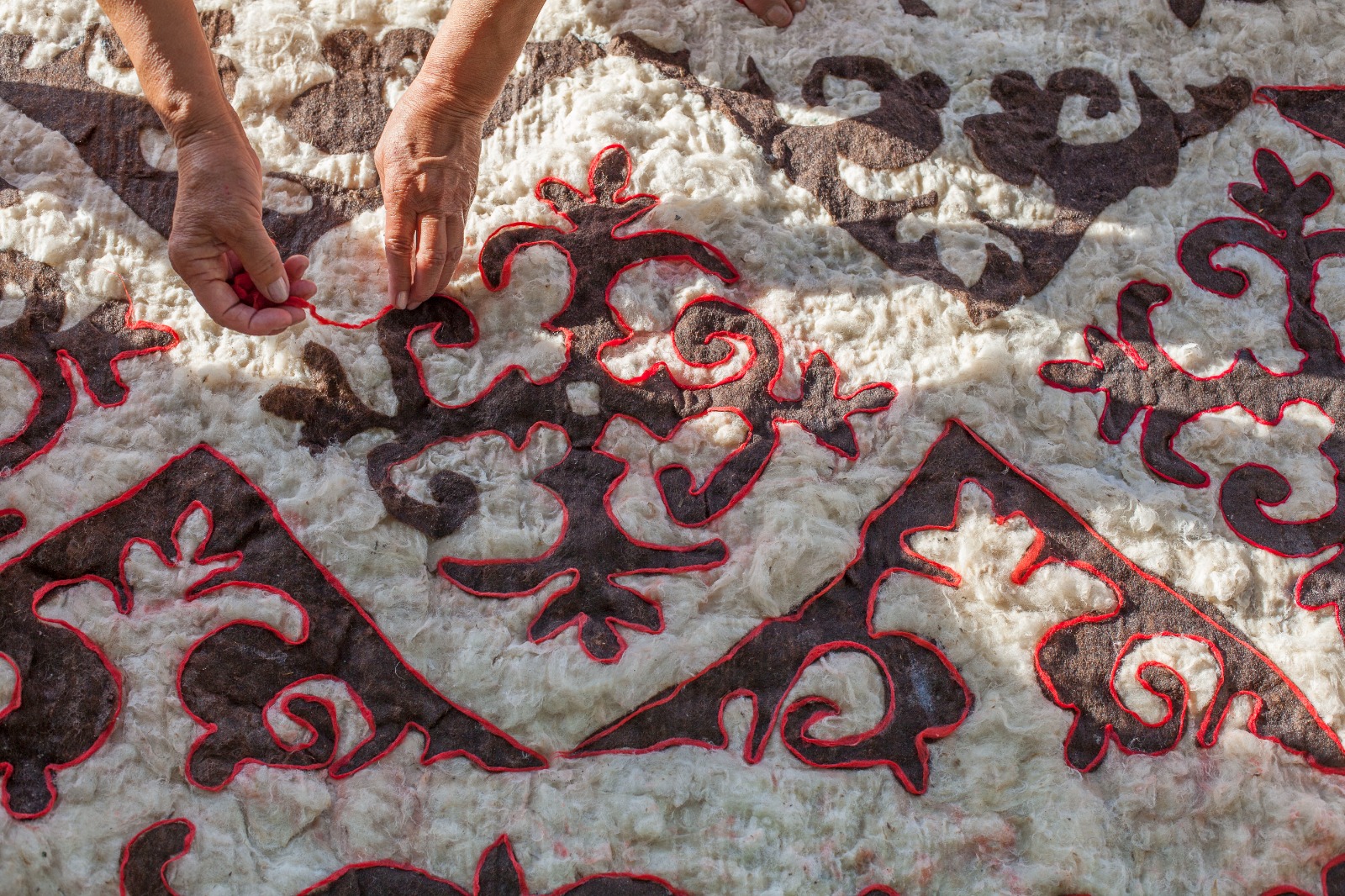
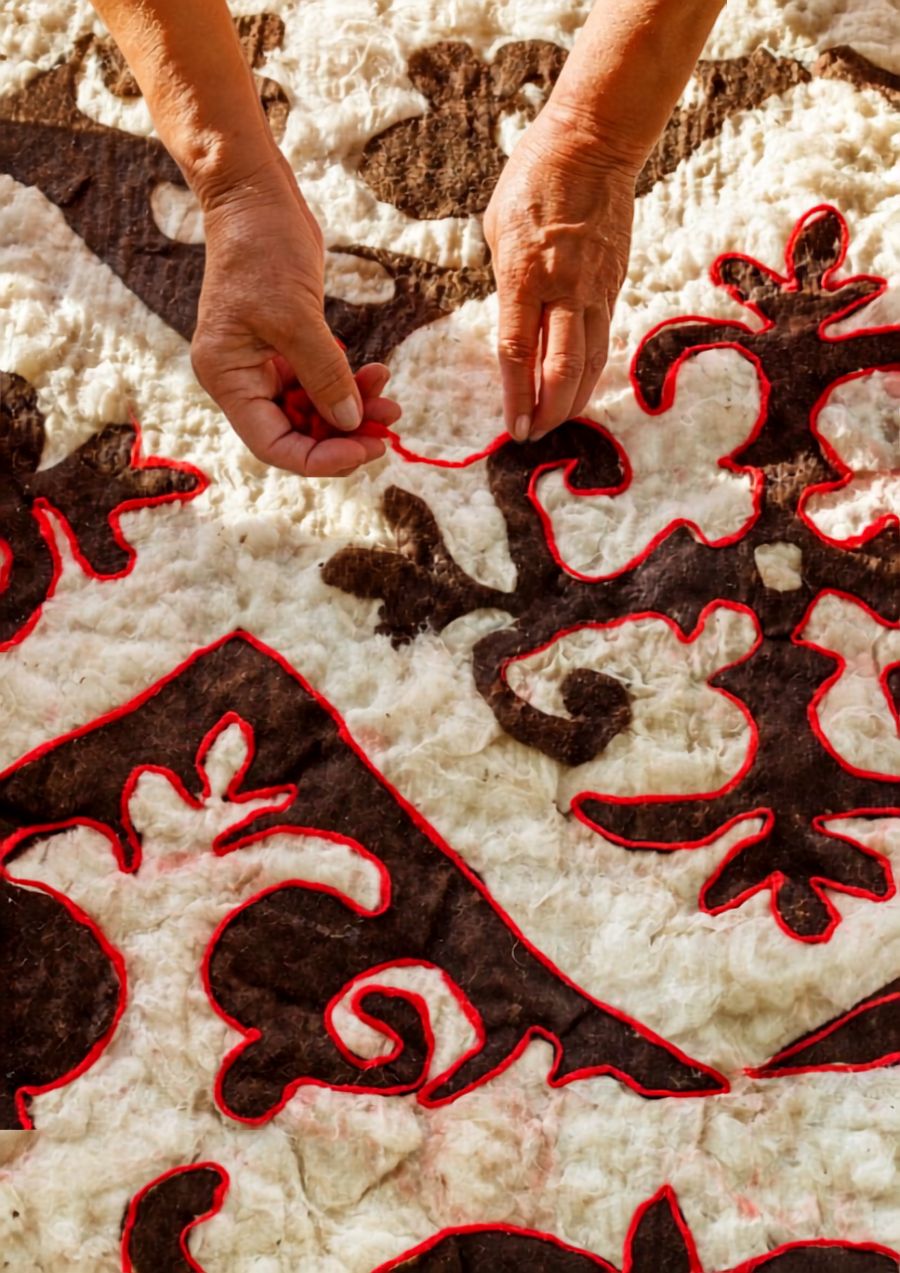
In this four-hour workshop, you’ll discover the syrmak, one of the oldest symbols of Kazakh craftsmanship, born of the nomadic way of life of the steppe peoples. Made from wool felt and decorated with hand-stitched patterns, the syrmak was never just decoration for the yurt — every motif carried meaning, evoking prosperity, protection of the home, or harmony with nature.
In this workshop, participants will discover this age-old technique by creating a small panel inspired by traditional Kazakh patterns.
Friday, September 18
Weaving Decorative Chiy Mats from Kazakhstan
2:00–6:30pm — 7 spots — Workshop led by the Union of Kazakh Artisans: Kalamkas Sarsengaliyeva, Mereke Aidarsha
Shym shi is a traditional Kazakh craft made from chiy, a steppe reed wrapped in colourful wool thread and woven into decorative mats. Used to protect and divide the spaces within the yurt, it also reflects the identity and skill of nomadic families.
In this workshop, participants will weave a small mat of their own while discovering this age-old technique.
Friday, September 18
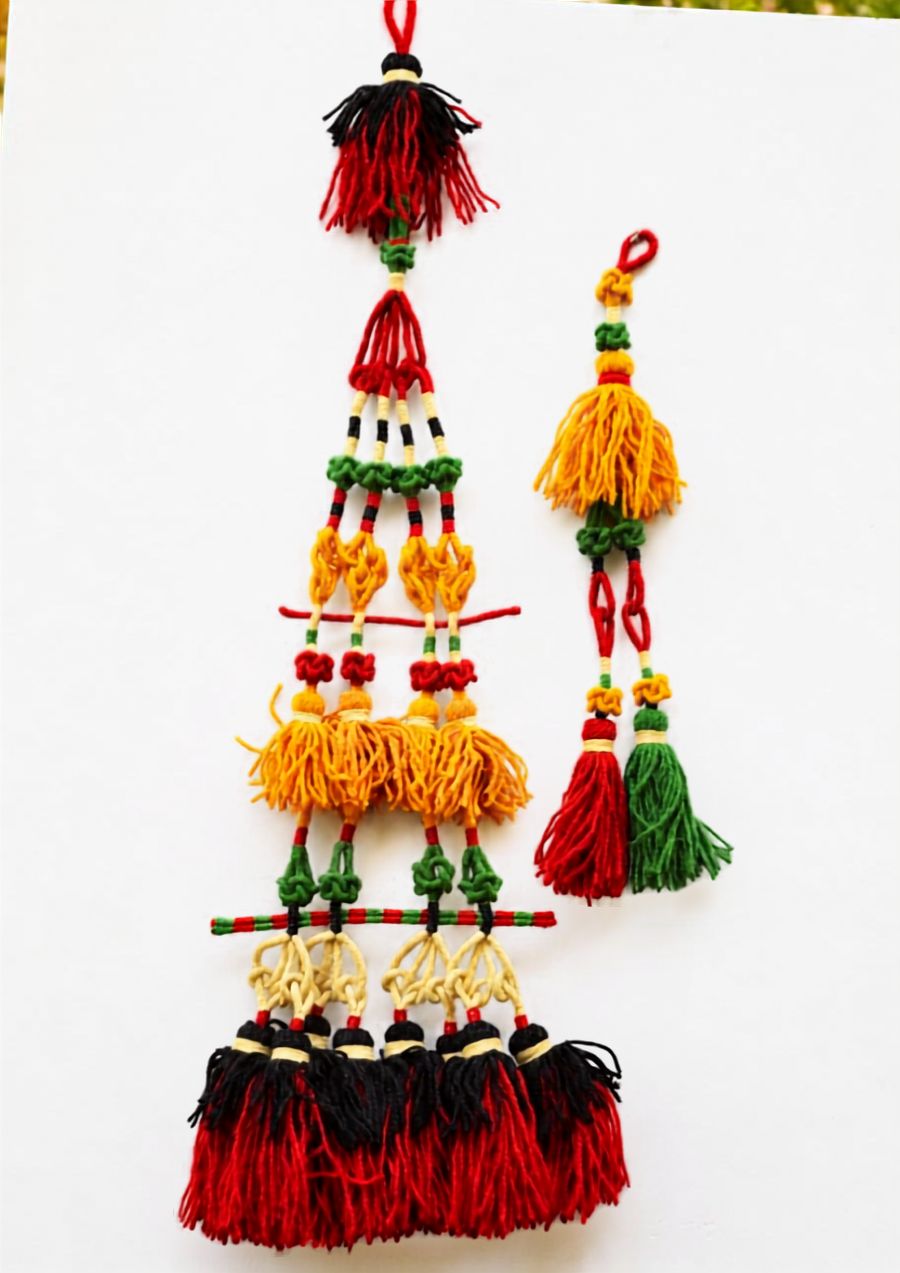
Making Traditional Shashaq Tassels from Kazakhstan
3:30–7:00pm — 6 spots — Workshop led by the Union of Kazakh Artisans: Kalamkas Sarsengaliyeva, Mereke Aidarsha
Shashaq are traditional textile ornaments that have been used for centuries to decorate clothing, saddles, harnesses, musical instruments, and the interior of Kazakh yurts. Beyond their decorative role, they were believed to bring protection and prosperity — and to ward off the evil eye.
In this workshop, participants will learn their history and make their own shashaq using traditional Kazakh techniques.
Friday, September 18
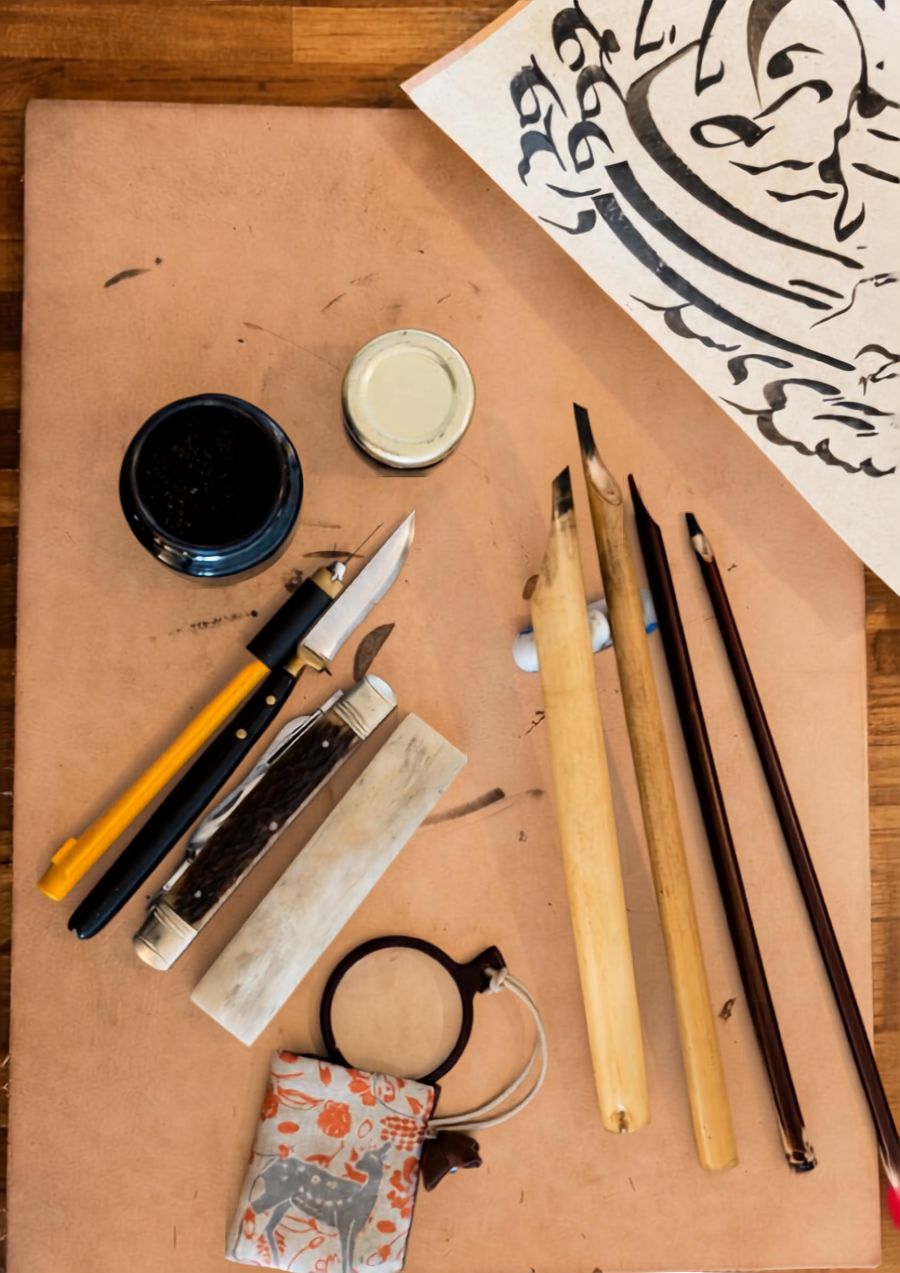
An Introduction to Persian Calligraphy
5:00–7:00pm — 15 spots — Workshop led by AragoRn Boulanger
Over two hours, calligrapher AragoRn Boulanger invites you to discover calligraphy in its traditional form and spirit — an art that helps you reconnect with yourself and find inner balance. Along the way, we’ll explore its history and philosophy, along with the rules, tools and basic forms of Arabic calligraphy, tracing the first strokes that will, in a search for harmony, build a sensitive and personal composition.
Friday, September 18
“The Imprint of the Senses”
4:30–7:00pm — 15 spots — Workshop in French, led by Maryam Imanizade-Diot
Maryam Imanizade-Diot, French-Iranian artist and visual arts teacher. A graduate of the Tehran Academy of Fine Arts and a PhD in the philosophy of art. Lives and works in the Alpes-de-Haute-Provence.
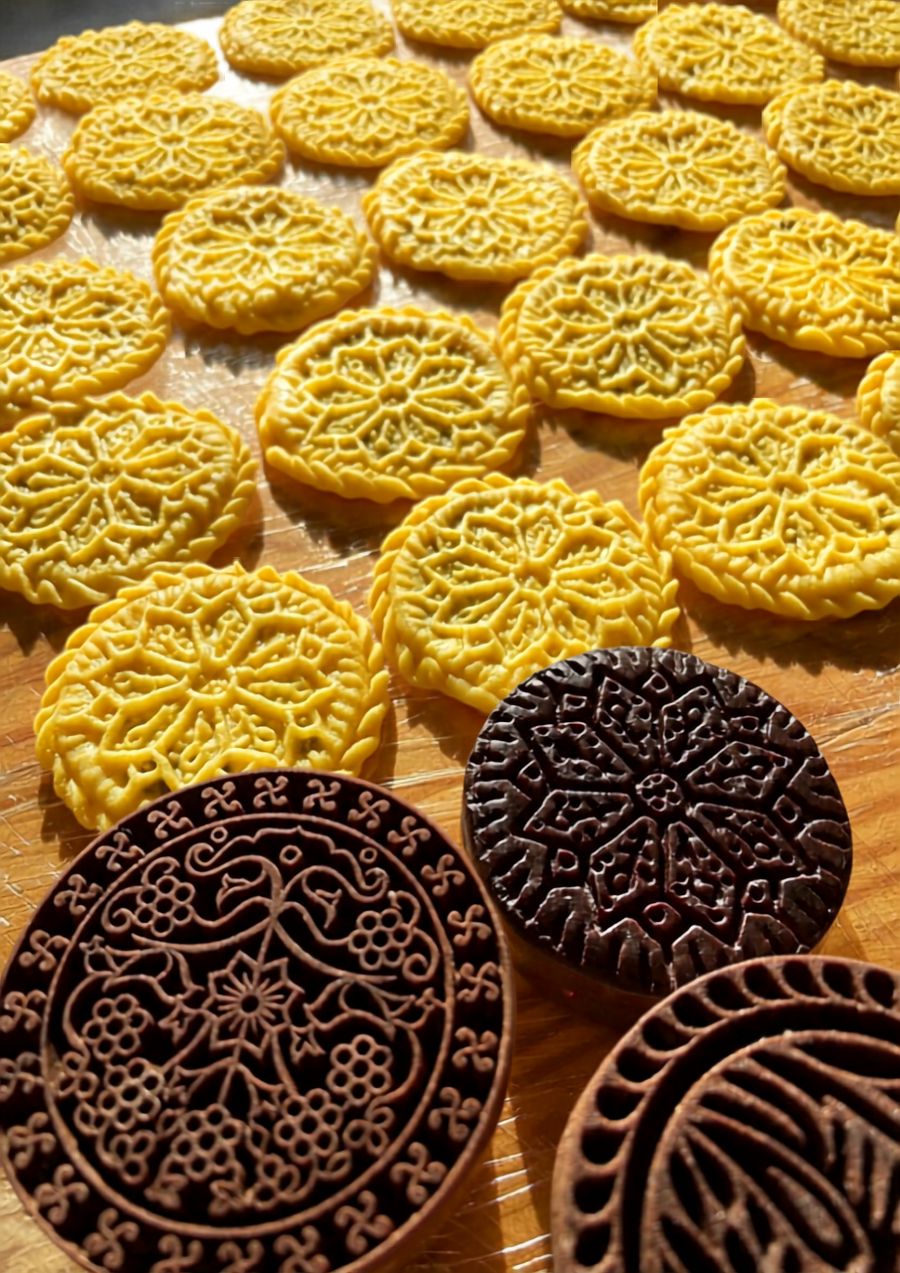
In this two-hour workshop, you’ll discover kolompeh, a traditional pastry from Maryam’s home region: saffron-scented dough filled with a paste of dates, walnuts and spices. Together, we’ll prepare the dough, shape it, stamp it with traditional patterns brought over from Iran, then bake it before tasting it all together.
This isn’t just a cooking workshop — it’s a journey from matter to the senses, from texture to flavour, from scent to memory.
Philosophy — In Iranian culture, the stamp is more than decoration; it’s a trace of human presence. When a pattern is pressed into the dough, a fleeting moment becomes a lasting imprint. In this workshop, the dough becomes a space for exploring all five senses — touch, smell, hearing, sight and taste all take part in the creative process. What emerges, in the end, isn’t just a pastry, but a shared experience meant to be passed on.
Why this workshop? Because food isn’t only made to be eaten — it can also carry memory, culture, and connection between people.
How the workshop unfolds (2 hours)
- 15 minutes: Introduction to kolompeh, its cultural origins and ingredients.
- 30 minutes: Shaping the dough, preparing the moulds and learning the traditional gestures.
- 30 minutes: Stamping the patterns with traditional Iranian stamps and prepping for baking.
- 25 minutes: Baking, with conversation along the way.
- 20 minutes: Tasting together and sharing impressions.
This event is organized by the Association Le Moulin Jaune en fêtes and the SLAVA Fund.
It is supported by the Île-de-France Region, the Seine-et-Marne Department, and the Coulommiers-Pays-de-Brie urban community.


